HOW TO SPOT BIAS, BUBBLES AND COMFORT ZONES

A culture of curiosity is becoming essential to escape echo chambers, bias and social bubbles. Other disciplines, including behavioural science and cognitive psychology offer important ways to broaden and deepen context and impact.
IN A WORLD of ever increasing options, quick judgements and snap decisions are inevitable. ‘Gut feeling’ remains important to a Creative Sector where risk-taking and subjective evaluation is in the DNA.
But what matters is that the motivations and bias informing decisions are identified, understood and factored into our process and mindset.
Our brains push us towards the familiar, the established and the consensual. Powerful algorithms in search engines, streaming services, etc. are all based on pushing us towards choices that feel like they are our own.
But there are also systemic biases for the creative industries, each of which has its own established way of viewing the world, whether consciously acknowledged or not.
It is easy to develop what psychologists and behavioural scientists call the‘outgroup homogeneity effect.’ In essence, it means we perceive the groups in which we move as diverse and outside groups as more similar.
The dangers of such thinking have been exposed in recent years in scandals about systemic gender imbalance in film and television production. Industries have hurried to close the gender gap but there are still glaring and growing social and demographic gaps.
THE RETHINKCREATIVE TAKE
◊ Curiosity and self-assessment can expose bias that restricts development.
◊ Creative Sector bubbles and comfort zones that are entrenched and hard to escape.
◊ Our workshops help clients identify the impact of biases.
◊ And we can help create a curiosity culture that opens new options for growth.
And there is still plenty of evidence of what psychologists call ‘othering’ in the way industries talk about potential audiences as a passive and homogenous ‘they’.
Nobel prize-winning psychologist and economist Professor Daniel Kahneman suggested
“We are blind to our blindness. We have very little idea of how little we know. We’re not designed to know how little we know.”
The culture of failing to recognise the narrow context of our thoughts and the blindness to the wider context is deep seated: Every language has an equivalent of the English expression about not being able to see the wood for the trees (or l’arbre cache souvent la forêt in French).
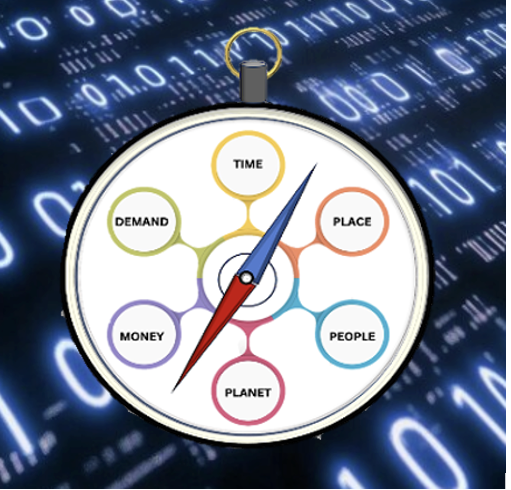
Sometimes, we need help to examine our own thought processes, which is why Rethink Creative has created a TABLE OF BIASES.
There are some biases that are particularly prevalent in the Creative Sector.
Social bubbles and echo chambers are reenforced by a privileged place in society and a growing number of festivals and awards to cement our own mythologies.
Critical analysis tends to be more focused on success stories than sharing and learning from failures. The idea of transcendent genius has retained its hold, alongside selective data.
These biases have a negative social impact but a lack of curiosity is also bad for business and sound policy. Sense-checking strategies and questioning missions and mindsets will be essential skills in a Prompt Economy.
AI will play a role in giving more businesses access to data but the evidence is that machine learning is also absorbing many of the established human biases. Interrogating data and a culture of curiosity may become more essential as AI takes hold.
RethinkCreative’s Prompt Card methodology and workshops provide a challenging, stimulating and instructive way to challenge our own assumptions and explore solutions.