CURIOSITY KEY TO CREATIVE RETHINKING

The Creative Sector needs to be focused on questioning assumptions and rethinking strategy and policy to succeed in a fast changing environment. It needs a culture of curiosity.
There is no shortage of data and analysis in today’s Creative Sector. Every festival and market across our industries is overwhelmed with predictions, consultancy reports and expert analysis.
And yet, year after year the same basic issues are still there, unresolved: content diversity, audience inclusivity, young audiences, the future of cultural funding, and on and on.
We are bombarded with solutions and answers without ever really getting to grips with the questions, or qualifying for the Socratic definition of wisdom – knowing what we don’t know.
What is too often missing is ‘curiosity’ – a desire to look more deeply at the challenges around us.
There are many reasons for the problem: a belief in the transcendent magic of the creative process; the myth of individual genius; the fragility of a business reliant on so many x factors.
Success in the arts and creative businesses is hard enough to get, never mind to keep. So who wants to rock the boat?
But while by some metrics most of the Creative Sector is thriving in relatively calm seas, there are storm clouds on the horizon.
Smart Creative Sector businesses and policy-makers know that periods of calm are exactly when reviewing practices, policy and progress are most valuable. They also know that the sector cycles through periods of growth and stasis, making adaptability and agility vital.
But while by some metrics most of the Creative Sector is thriving in relatively calm seas, there are storm clouds on the horizon.
THE RETHINKCREATIVE TAKE
◊ A fast-changing environment requires a culture of curiosity, questioning our assumptions.
◊ Long-term questions are more important than short-term ‘solutions.’
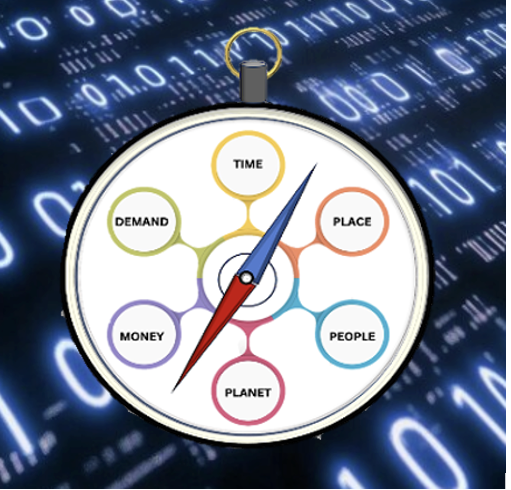
◊ Our Prompt Deck workshops help build fresh thinking and support change management.
◊ A curiosity culture is critical to navigating an AI-dominated future.
Smart Creative Sector businesses and policy-makers know that periods of calm are exactly when reviewing practices, policy and progress are most valuable. They also know that the sector cycles through periods of growth and stasis, making adaptability and agility vital.
And there will always be decisive breaks from established norms as the crash of 2008/2009 perfectly illustrated. (Watching The Big Short from time to time is helpful).
Current forces make this a time when rethinking is now a necessity:
- Speed of development: AI has already dramatically shifted the pace of change.
- Consensus collapse: Social, cultural and political consensus has fragmented.
- Cultural diversity: Cultural diversity, which underpins public policy and the indie business model, is under threat.
- Social bubbles and echo chambers: The power of social bubbles has grown, accentuating hidden biases and making it difficult to see broader perspectives and context.
Rethinking goes beyond responding. It’s also about anticipating and generating opportunity. Our knowledge economy is more than a matter of data, it requires a shift of mindset and a focus on the context for decision-making.
The value of AI – perhaps more than any previous digital advance – will depend on the scope of the ‘prompt’ you feed it. AI will offer efficiencies but it can only offer competitive advantage if you can make it ‘think’ differently.
But this is not just about AI, which illustrates and amplifies the importance of framing and perspective. It is about creating a culture of regular thinking, and rethinking of our approaches in a changing ecosystem. We have developed an approach that interrogates assumptions, drawing on a wide range of influences and knowledge, including behavioural science, social research and psychology.
The role of RethinkCreative is to help you develop into that questioning, informed and agile operator in the creative sector that you want to be.